
Maria Ressa on defending democracy and 'The Fight Back'
Clip: 10/29/2026 | 8m 42sVideo has Closed Captions
Maria Ressa offers a guide to defending democracy in 'The Fight Back'
Journalist and Nobel Peace Prize laureate Maria Ressa chronicled her fight against the Duterte regime in the Philippines in her 2022 book, “How to Stand Up to a Dictator.” She detailed attacks on her reporting and her newsroom's struggle to defend press freedom and democracy. In a new book, Ressa warns of other threats to those same freedoms. Amna Nawaz spoke with Ressa about “The Fight Back."
Problems playing video? | Closed Captioning Feedback
Problems playing video? | Closed Captioning Feedback
Major corporate funding for the PBS News Hour is provided by BDO, BNSF, Consumer Cellular, American Cruise Lines, and Raymond James. Funding for the PBS NewsHour Weekend is provided by...
Maria Ressa on defending democracy and 'The Fight Back'
Clip: 10/29/2026 | 8m 42sVideo has Closed Captions
Journalist and Nobel Peace Prize laureate Maria Ressa chronicled her fight against the Duterte regime in the Philippines in her 2022 book, “How to Stand Up to a Dictator.” She detailed attacks on her reporting and her newsroom's struggle to defend press freedom and democracy. In a new book, Ressa warns of other threats to those same freedoms. Amna Nawaz spoke with Ressa about “The Fight Back."
Problems playing video? | Closed Captioning Feedback
Where to Watch PBS News Hour
PBS News Hour is available to stream on pbs.org and the PBS app.
Providing Support for PBS.org
Learn Moreabout PBS online sponsorshipGEOFF BENNETT: Journalist and Nobel Peace Prize laureate Maria Ressa chronicled her fight against the Duterte regime in the Philippines in her 2022 book, ""How to Stand Up to a Dictator."
She detailed years of attacks in her reporting and her newsroom's struggle to defend press freedom and democracy.
Now, in a new book, Ressa warns of different threats to those same freedoms.
Amna Nawaz spoke with her earlier today.
AMNA NAWAZ: According to Maria Ressa, there's a dual threat now by autocratic leaders and big tech companies weaponizing information and algorithms to create new crises for democracy and humanity.
That's all in her new book called "The Fight Back: A Citizen's Guide to Standing Up to Dictators."
And Maria Ressa joins me now.
Welcome back.
It's good to see you.
MARIA RESSA, Author, "The Fight Back: A Citizen's Guide to Standing Up to Dictators": Good to see you.
Thanks for having me, Amna.
AMNA NAWAZ: You talk in the book about what you call an unholy alliance between state power and platform power.
What do you mean by that?
MARIA RESSA: A decade of harms from artificial intelligence, right?
We're only talking about the tail end of it.
But we have talked a lot about my two dictators in the Philippines.
It was Rodrigo Duterte, who won as president in 2016 with the help of Facebook.
And my second dictator, who I would argue is more powerful is Mark Zuckerberg, because, at that point, 93 percent of Filipinos on the Internet were on Facebook.
Facebook is our Internet.
And here's the part.
They both act with impunity, but Rodrigo Duterte is now waiting at The Hague for his trial to begin, his charges of crimes against humanity, while, from 2016 to today, Mark Zuckerberg is still acting with impunity.
He's not been elected for anything.
And the three phases of harms that we have had from the attention economy, the tech that hacks our biology, right, when lies become facts, so the attention economy in social media, chatbots, and the harm, the intimacy that is taken from us, and the last one is agency itself with the agentic and multi-agentic world.
AMNA NAWAZ: We have seen that battle for facts, battle for the truth play out here in the United States.
As we talk here, we're days away from another critical midterm election.
You break it down in the book to talk about the convergence of three crises, truth, order, and accountability.
MARIA RESSA: Yes.
AMNA NAWAZ: How similar is all of this to what you saw under Duterte in the Philippines?
And be specific to what we're seeing here in the U.S.
now.
MARIA RESSA: What we lived through in the Philippines is that we found out we needed to leave the virtual world to come to the real world, right, and because I was getting an average of 98 messages per hour.
When we came into the real world, that was how we had a whole-of-society approach that ultimately led to the arrest of Rodrigo Duterte.
And then we had just recently Brazil.
Brazil, if you remember, right, they have the same two dictators we had in the Philippines in 2016.
President Trump, similar, right?The state and Meta, Mark Zuckerberg under a different name now.
And what the -- after the first run-off elections, when it looked like President Lula was going to lose, I'd never sensed such a desperation in Brazilians.
And they used WhatsApp to mobilize in the real world.
And they mobilized the largest ever out, same thing that happened in Serbia.
This time, the students, they moved from the virtual world to the real world.
I don't see that same kind of desperation yet in America.
But I do see an awareness that AI and, more importantly, data centers are something Americans don't want.
And that seems to be bipartisan.
But, having said that, this is the moment, right?
The world is looking at America.
What choices are you going to make?
AMNA NAWAZ: You offer very specific, tangible steps at the end of each of your 10 chapters that you want people to try to follow just to be aware of the role that they play in the spread of misinformation... MARIA RESSA: Yes.
AMNA NAWAZ: ... in the maybe falling apart of accountability in many ways too.
The very first chapter, step one, you say track your screen time for seven days.
MARIA RESSA: Yes, absolutely.
AMNA NAWAZ: Why is that important for Americans to do?
MARIA RESSA: Because think about it.
The more time you spend on here, the less time you spend in person with someone else.
And this is not meant to educate you or to build real intimacy, real connections.
This is done for power and profit.
It's meant to keep you scrolling, right?
And so that first step, how much of your life have you given to screens, to technology that is both extractive and predatory?
And then the second step after that in chapter one is delete the app, one app on your phone, and hopefully it's the one that makes you angriest, because what the technology has done is to take the worst of us as people.
And when you're angry, you stay scrolling the longest.
So that gives more power and money to the tech company, but takes away from you, right?
So that's -- these are the steps, 10 chapters, 10 steps at the end of every chapter.
And at the end of it, I put 10 strategic goals to defend our rights, to protect our rights.
But I had a debate with my publisher on this because they wanted me to put it in -- at the back cover of the book.
I didn't want to do that because then you would look there first and you will look at it and you will say, oh, my God, that's like climbing Mount Everest.
It isn't hard.
And every step, one step at a time, I learned this in the Philippines.
I think the other part is this.
When you are the target, and each of us on these platforms are the target, you have tremendous power.
So don't give up your power.
Use it.
AMNA NAWAZ: There are people who will hear what you have to say and think it sounds very hyperbolic.
Democracy is not really at stake.
Humanity can't really be at stake when you're talking about the power and the confluence of big tech and state coming together.
And the institutions in America have held, right?
What would you say to that?
MARIA RESSA: I would say they have been hollowed out, if you take a look at where we are in America today.
It took Rodrigo Duterte six months to collapse our institutions, and the Philippines has a Constitution patterned after the United States, right?
So we had the strongest executive ever.
Just remember, our first dictator, Marcos, Ferdinand Marcos, the father, declared martial law by executive order.
In the first 100 days of Trump 2.0, he issued 143 executive orders in 100 days.
And those executive orders, we journalists covered in the physical world.
But what we didn't show was how each one was a content trigger in the virtual world that further separated any kind of gatekeepers, the journalists, the courts, actually the judiciary and the legislature, right?
And it became a gladiators' battle to the death, the executive just rallying, very similar to what happened on January 6.
That's what happened online.
The institutions have been hollowed out.
Your data has been taken God knows where right now, right?
DOGE, that's the second part.
It's in the unholy alliance.
Journalism, the business model of journalism is at a market failure point.
Public broadcasting in so many ways has been curtailed, right?
So you're fighting an upstream now.
And the key part here is to take the power that you have, to take the laws that are in the Constitution and hold the line.
You're where we were in 2017 or 2018.
Look, in 2017, hashtag #arrestMariaRessa was trended by the information operations against us.
It became number one in the Philippines.
I was arrested two years later.
And then I was arrested.
It took a little over a year where I had 11 arrest warrants.
You're going to living through this now in America.
Don't normalize it.
Realize it is death by 1,000 cuts.
If you do not act, if you do not reclaim your rights, you will lose it.
AMNA NAWAZ: The author is Maria Ressa.
The new book is called "The Fight Back: A Citizen's Guide to Standing Up to Dictators."
Maria, thank you for being here.
MARIA RESSA: Thanks for having me.
 New
Brewers bring World Series title to MLB's smallest market
Video has Closed Captions
Brewers bring World Series title to MLB's smallest market (3m 47s)
 New
How colleges are helping students build social skills
Video has Closed Captions
How colleges are helping students build social skills for the workforce (7m 45s)
 New
Mapping the battle for control of the House
Video has Closed Captions
Mapping the battle for control of the House (3m 31s)
 New
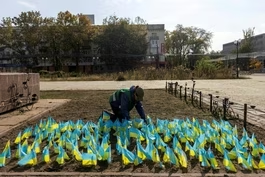
News Wrap: Ceasefire in Oleshky holds for a third day
Video has Closed Captions
News Wrap: Ceasefire in Oleshky holds for a third day (8m 57s)
 New
Pennsylvania races test who voters blame for high prices
Video has Closed Captions
Pennsylvania congressional races could hinge on who voters blame for high prices (7m 31s)
 New
Republicans seize on controversy in Alaska’s Senate race
Video has Closed Captions
Republicans seize on controversy in Alaska’s closely watched Senate race (5m 5s)
 New
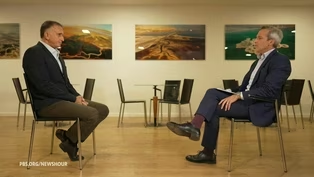
Retired Israeli general on what the election results tell us
Video has Closed Captions
Retired Israeli general on what the election results tell us (6m 59s)
Providing Support for PBS.org
Learn Moreabout PBS online sponsorship
- News and Public Affairs

FRONTLINE is investigative journalism that questions, explains and changes our world.

- News and Public Affairs

Today's top journalists discuss Washington's current political events and public affairs.



 New Episode


 New Episode





Support for PBS provided by:
Major corporate funding for the PBS News Hour is provided by BDO, BNSF, Consumer Cellular, American Cruise Lines, and Raymond James. Funding for the PBS NewsHour Weekend is provided by...